In general, as spiritual beings, we know the importance of establishing boundaries with other people for our own mental health and protection. However, it can be difficult to set your own boundaries when you’re not even sure what they are or how to do it. When I first started doing healing work, I wasn’t sure where that “line in the sand” should be.

It is very often in the complexities of human dynamics that we allow self-sacrificial, nurturing, co-dependent traits of ours to outshine our personal needs for others- specifically our loved ones. We tend to put their happiness and wants before our personal needs. In our professional and intimate relationships, we do so for the avoidance of conflict. Ever feel that by putting your needs first and setting boundaries you feel a pang of guilt and selfishness?
Depending on the environment, society and family upbringing, some of us may not have role models to look up to for healthy boundaries and self-care. There may be loose boundaries or no boundaries at all. It could be from no privacy, excessive physical touch, the inability to say no and so forth. Establishing boundaries and self-care conditioning is not often a topic taught in school for children. This potentially stems the belief that boundaries are not necessary and it is something we are meant to learn only when we are older.
In some of our upbringings, we may have to adopt the role of care-takers at a young age for our siblings, parents, etc. This involves taking up adult responsibilities and feeling the need to nurture, tend and assume natural obligations towards our loved ones- even at a young age. A codependent family may involve taking in and accommodating a family member’s mood swings or bad habits (addiction, alcoholism, unemployment, physical abuse, etc.), leaving very little energy and room for prioritizing oneself. We may even be heavily condemned for putting our needs first as being selfish, disrespectful and feel a deep-seated fear of abandonment.

Depending on situations, this results in the need to be on “survival” mode in these circumstances and on contrary, further retreating our personal feelings and needs. We mold into this person defined by our circumstances. This could be the result of growing up in a household where boundaries were not set and welcomed, shaming is consistent and vulnerability is condemned or perceived as a weakness. There was no time for self-care or prioritizing one’s needs and wellbeing and further accentuate codependency traits in us.
Physical boundaries include personal space, physical touches and privacy. It begins with the awareness of what is right and wrong in various physical relationships and settings. A violation of physical boundaries looks like excessive and uncomfortable physical contact from an individual, browsing through your phone and emails, rummaging through your bedroom and other physical invasions of space.
Emotional boundaries begin with mindfully holding our thoughts and our chain of emotions. It is tapping into our awareness as to why our feelings arise within ourselves and others. It is holding a separate funnel for our emotions and others. It is recognizing that they are not interlinked or ours to take up. A violation of emotional boundaries is whereby you allow other’s emotions dictate and merge with yours (codependency) when you allow someone to invalidate and belittle your emotions when you sacrifice your goals and plans for someone else and take up ownership and blame for their emotions.
Importance of boundaries
As an individual, I always assumed that I held strong boundaries in my life. It was only in recent months, when I started experiencing certain physical health issues and varying levels of stress & anxiety, I knew I needed to put myself first a little bit more. And hey, it’s not easy. After some self-reflection, I realized I did not have conversations of healthy boundaries when I was young. I had my own room since I was young than most kids my age would, a rather happy childhood and upbringing, but I was also raised in an Italian & Catholic home where my relatively close-minded father perceived his rights to every corner of the home- including my room and personal items. He did not understand what boundaries were because he was not educated on what they were in his own upbringing and environment growing up.
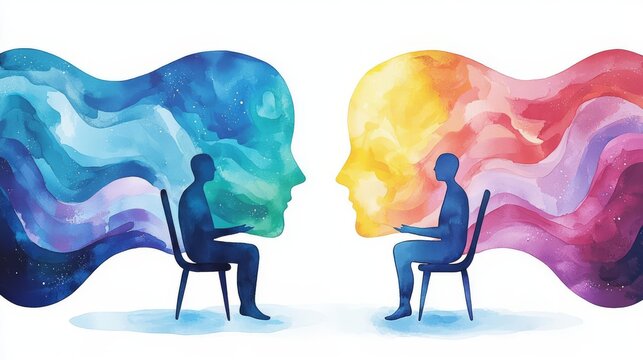
Recently, I have also realized even further how I had poor boundaries especially with the ones I love. My previous partner and I were very connected and he was going through a difficult time in his life. Each time something happened in his life or in our relationship, I fell terribly ill. It was then I was aware of my codependency traits towards him as I was very reactive towards every little thing in his life, even those I did not understand. I felt a need to be his savior, his therapist and his pillar. I felt completely responsible for what he was going through. I forgot how to draw a healthy emotional boundary in our relationship. Most of all, I have forgotten how to separate my energetic, emotional and physical health with myself.
It is innately our sense of identity as an individual rather than being a sponge for everyone else. Drawing healthy boundaries is crucial for our mental health and well-being. It instills self-respect and courage. By showing others how we want to be treated, we are also reminding them to do it for themselves. Setting boundaries help you manage stress and reduce burnouts in our personal and professional life. Boundaries also allow us to hold a safe space for personal healing before we seek to do so for others.
Drawing boundaries is a very sacred, but necessary, aspect of inner work.

 Louis Grassi